

We've moved... come and join us!
14 years ago


 The mural was fun, too, although Nicholas sort of missed the point and didn't put the animals in their habitats. He was going for the silliest placement possible!


 Nicholas and Katie Grace enjoyed trying to grind corn.


 Michael liked the star finder. We were really disappointed the planetarium wasn't running that day.
 Madagascar hissing cockroaches. Blech! This was definitely the grossest thing in the live animal room.

 Nicholas was fascinated by the turtle in his tank.
 "La Grande Jatte" by Georges Seurat
 Nicholas used a q-tip.
 And Katie Grace used her own fingers.


 Then we added flowers for the tens. We were going to add bugs for the fives, but that seemed very labor intensive.
 Now we're drawing/coloring pictures on rainforest animals, and she's practicing writing her number words. She's also writing a page about each animal and drawing a picture.

 That's an icicle hanging off his nose!



 Nicholas just sort of went to town. He had fun mixing colors though.
 Katie Grace made on ocean scene, with waves, fish, sunshine, an island, and a volcano!
 And finally, Michael made two volcanos with large palm trees. I think.
 Well, I feel foolish.
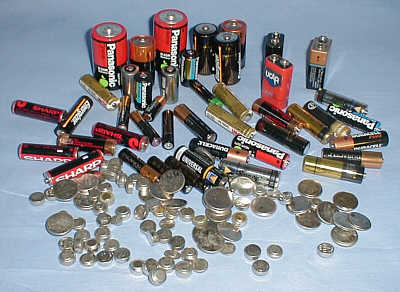
Batteries may produce the following potential problems or hazards:
 | Pollute the lakes and streams as the metals vaporize into the air when burned. |
| Contribute to heavy metals that potentially may leach from solid waste landfills. |
| Expose the environment and water to lead and acid. |
| Contain strong corrosive acids. |
| May cause burns or danger to eyes and skin. |
In landfills, heavy metals have the potential to leach slowly into soil, groundwater or surface water. Dry cell batteries contribute about 88 percent of the total mercury and 50 percent of the cadmium in the municipal solid waste stream. In the past, batteries accounted for nearly half of the mercury used in the United States and over half of the mercury and cadmium in the municipal solid waste stream. When burned, some heavy metals such as mercury may vaporize and escape into the air, and cadmium and lead may end up in the ash.
Scary stuff.


