Showing posts with label Activism. Show all posts

Thursday, February 18, 2010

Beyond the Brothers Grimm


In the early years, much of Waldorf education is centered around Grimm's fairy tales, and I understand why-- the Brothers Grimm bring a lot to the table. Archetypal figures, clear cut examples of good and evil, beautiful descriptions that allow children to create a picture in their hearts and minds, these fairy tales have captured the hearts of parents and children alike for generations. Beyond that, they are part of our collective heritage and hearing them gives children a cultural literacy that is sadly falling by the wayside in our society.

However, they are not without problems. The protagonist is often described in very Eurocentric terms-- white skin, golden hair, and so on. In Mother Holle, for example, the good, hard-working daughter is rewarded with riches and gold. The lazy daughter is turned black. This white = good, black = bad imagery is found in many stories, even modern day ones (for example, Harry the Dirty Dog) but it's prevalence shouldn't make it any more acceptable to us. Just as we hope the positive, enduring messages of the fairy tales make their way into the souls of our children, we should be aware that unwelcoming, stereotypical messages are being heard on some level as well.

When I was in a classroom ten years ago, a great deal was being said about multicultural education. While the intent of multuculturalism is positive-- teaching children about other cultures so they will grow to respect them and not fall into the trap of racism and prejudice-- this path often leads to a tourist approach to other cultures. To celebrate Chinese New Year, we might tell a story from the Chinese culture, followed by making a dragon, cooking a "Chinese" dish, making a "Chinese" hat, singing a "Chinese" song. Instead of focusing on learning about the Chinese people or the diversity of culture found in China, we exoticize and trivialize the culture, comparing it to our own as if we are the measuring stick for all things. It is as if we want to divide the world into two sections: people who are "just like us" and people who are "different from us."

Beyond multiculturalism is the anti-bias approach, which actively seeks to challenge prejudice, stereotypes, and bias. Instead of being "color blind"-- which really only works if you are part of the dominant culture; minorities do not have that luxury-- we encourage children's questions and observations, and aren't afraid to add to the conversation. It frees us to appreciate similarities and differences.

This is not to say that we should have long, drawn-out, adult-initiated conversations with our children about the heady topic of race. As in all things, Waldorf education in the early years seeks to educate through imitation, a warm and loving environment, imaginative play, and meaningful work. It respects a child's connection to nature and to their home environment. It seeks to create a rhythmic and predictable environment as a child grows more and more into themselves and becomes more aware of the world around them.

What, then, can we as parents do to encourage a non-biased approach without being overly didactic in our methods? I have several suggestions.

~ Choose books that show people of all colors and cultures, and not just one or two as a token. Some of my favorites are
More, More, More Said the Baby by Vera B. Williams
Hooray! A Pinata! by Elisa Klevins
Ten, Nine, Eight by Molly Bang
Swimmy by Leo Lionni

Avoid books with "I is for Indian"-type stereotypes.

~ In your play kitchen, include food and utensils from other cultures. I've seen many lovely online tutorials for felt food from around the world.

~ When choosing art materials, include skin-toned paper, paints, crayons, and play dough. I am well aware of the controversy in Waldorf education surrounding the use of brown and black crayons and frankly, find it ridiculous.

~ Play games and sing songs from other cultures and in other languages. Sing simple songs in more than one language.

~ Make dolls and doll clothes using a variety of skin tones and facial features.

~ Be aware of your own use of language. Don't make disparaging comments about the colors black and brown. If you're child makes a comment about something being "yucky brown like poop and dirt" you can counter with a comment about "beautiful brown like cinnamon and chocolate."

~ Use folk tales and fairy tales from other cultures. Tell the stories with puppets and table dolls that represent those cultures.

It's a complex subject and one that sadly, in a fallen world, I don't think we're ever truly going to get "right". But there's a lot we can do to be proactive. If we can't create a perfect world, we can, perhaps, work together to make a better one.

Tuesday, January 26, 2010

Why you shouldn't send formula to Haiti.

I know all of our hearts go out to the people of Haiti, especially the smallest of the small, the babies. And often, when we think of babies, we think of bottles and formula. I would beg you to think before you send donations of formula to Haiti. That isn't to say formula donations are always bad-- formula donations would be welcomed by foster care agencies, domestic abuse programs, and adoption centers, to name a few. But to send a finite amount of formula to a country torn apart by natural disaster, with filthy and unreliable water supplies, is not helping babies. This well thought out article explains the dangers of sending formula to Haiti.

English translation very kindly prepared by Jeanette Panchula, IBCLC in California.

*************************

The donations of formula for bottle feeding in times of catastrophe such as war, earthquake and floods, are very dangerous. In fact, they are not donations, but instead free samples - it is the means by which formula companies compete to create new markets. If you pay attention to the news, you will frequently hear how an airplane has departed loaded with FORMULA-rarely will you hear of a plane loaded with beans or noodles. That is because the companies that sell noodles and beans, unless they have an especially generous director, have no commercial interest in making donations. While the country in question is in ruins, it is unable to pay for food; when they overcome the catastrophe they will eat their own beans grown in their own country, or their own noodles made in by local enterprises. On the other hand, if in a third world country you can take over lactation, you get millions of women to abandon breastfeeding and millions of doctors and nurses will learn the advantages of bottle feeding, which without a doubt is wonderful because Non-Governmental Organization (NGO) “X” gave it to us as a gift, then you have a captive market that will be worth millions because that milk is not manufactured in the country and it must be imported, and if used to brand Z, they will probably continue to buy brand Z.

Las donaciones de leche para el biberón en casos de catástrofe (guerra,
terremoto, inundación...) son sumamente peligrosas. En realidad no son
donaciones, sino muestras gratuitas: es el medio por el que las empresas
lácteas compiten para hacerse con nuevos mercados. Si estás atento a las
noticias, muchas veces habrás oído cómo ha salido un avión cargado de
leche... raramente oirás de un avión cargado de macarrones o lentejas.
Porque las empresas que venden macarrones o lentejas, fuera de que alguna
en concreto tenga un director especialmente generoso o solidario, no tienen
un interés comercial en hacer una donación. Mientras el país en cuestión esté
en ruinas, no pagarán por la comida; cuando superen la catástrofe, se
comerán sus propias lentejas cultivadas en su país, o sus propios macarrones
fabricados por empresas locales. En cambio, si en un país del tercer mundo
consigues cargarte la lactancia, consigues que millones de madres abandonen
la lactancia y millones de médicos y enfermeras aprendan las ventajas del
biberón, que sin duda es buenísimo porque la asociación X nos lo regalaba
para ayudarnos, luego tendrás un mercado cautivo que valdrá millones,
porque esa leche no se fabrica en el país y la tendrán que importar, y
acostumbrados a la marca Z probablemente seguirán comprando la marca Z.

- Years ago a request was made that donations be given with just a white label stating "milk for babies" with no brand, but of course the manufacturers refused. In addition, the manufacturer saves on transport by giving the free samples to an NGO – SERIOUS NGOs no longer accept them, but at times one will - or a government accepts them and THEY pay for the transport. And the real market, let us not fool ourselves, is in the third world. In Spain only 500,000 babies are born a year. In Indonesia, more than 5 million and in India 25 million. There are many more clients, although some will die on the way, and will only buy their milk for a week, and dilute it so that it will last...


Hace años pidieron que los donativos fueran con una etiqueta blanca,
"leche para bebés", sin marca, y los fabricantes, claro, no quisieron. Además,
muchas veces la empresa fabricante se ahorra el transporte: se limita a
entregarle las muestras gratuitas a una ONG (por suerte las ONG serias ya
no las aceptan, pero a veces encuentras a un primo), o a un gobierno, y estos
pagan los portes. Y el mercado de la lactancia, no nos engañemos, está en
el tercer mundo. En España sólo nacen menos de 500.000 niños al año; en
Indonesia más de 5 millones, en la India más de 25 millones... Son muchos
más clientes, aunque algunos se mueran por el camino, aunque sólo se
compren una lata de leche por semana y la diluyan para que dure...

- Some years ago, at the end of the war in Sarajevo, I met a Bosnian pediatrician in a meeting. He had suffered real hunger and was very thin, and during the meals he would pick up the smallest piece of bread that would fall on the tablecloth and eat it. He explained to us how at the beginning of the war, infant mortality rose horribly, as they were flooded with free samples. Of course, not all the professionals are knowledgeable about breastfeeding, as happens here. Many began to recommend "a little help" thinking the mothers, "stressed" by the war, would have NO milk, or wanted to help the poorly-nourished mothers by reducing the "load" of having to breastfeed. With no drinking water nor gas to boil it (as occurs also in Gaza today), when the explosions destroyed the water system and feces floods the lower floors....the death rate was enormous. It fell upon the more knowledgeable pediatricians who went to UNICEF and called a meeting of the NGO's in the area, getting them to agree to not distribute any more free donations, and also provided their personnel with education on breastfeeding in emergencies...[which is available on-line from UNICEF now] in a few months, while the war continued, they were able to have a higher rate of breastfeeding and a lower infant mortality than prior to the war.


Hace unos años, acababa de terminar la guerra de Sarajevo, conocí a unpediatra bosnio en un congreso. Había pasado hambre, estaba delgadísimo, y en las comidas recogía hasta la más minúscula miga de pan que cayera en el mantel y se la comía. Nos explicó como al principio de la guerra la mortalidad infantil aumentó espectacularmente, porque fueron inundados con muestras gratuitas. Claro, no todos los profesionales tienen buena formación sobre lactancia, igual que pasa aquí. Muchos empezaron a recomendar "ayuditas", pensaban que las madres, "estresadas" por la guerra, no tendrían leche, o que al quitarle a una madre mal alimentada la pesada "carga" de tener que dar el pecho le hacías un favor. Sin agua potable ni gas para hervirla (lo mismo que ocurre ahora en Gaza), cuando las explosiones destruyen las alcantarillas y la mierda inunda las plantas bajas... la mortalidad fue enorme. Tuvieron que ser los pediatras más concienciados los que fueran a quejarse a UNICEF, que convocó una reunión de todas las ONG sobre el terreno, acordaron no distribuir más donaciones, realizaron cursos para el personal... en pocos meses, mientras la guerra continuaba, habían conseguido tasas de lactancia materna más altas y una mortalidad infantil más baja que antes de la guerra.

- Of course some children need artificial milk in times of war; but for these few formula can be found without enormous loads of free samples. And those children, in those conditions, have such a high death rate that we can no longer think "the mother is free to decide if she wants to breastfeed or formula-feed." In these conditions we must do everything we can to promote relactation even if it has been months since the mother breastfed, or find a wet-nurse. And sadly, it is not difficult to find them...because babies are weaker than adults - and in any catastrophe there are more mothers without babies than there are babies without mothers...

Por supuesto algunos niños necesitan leche artificial en las guerras; pero
para esos pocos ya se consigue leche sin necesidad de espectaculares
cargamentos de muestras. Y esos niños, en esas condiciones, tienen un
riesgo de muerte tan alto que ya no vale aquello de "la madre es libre para
decidir, y si ha elegido la lactancia artificial...".En esas condiciones
hay que hacer todo lo posible para que la madre relacte, aunque lleve meses
sin dar el pecho, o para encontrar una nodriza. Y tristemente eso no es muy
difícil, porque los bebés son más frágiles que los adultos: en cualquier
catástrofe hay más madres sin bebé que bebés sin madre.


Greetings…

Dr. Carlos González Rodríguez

Pediatrician, Barcelona, Spain
Founder of the Asociación Catalana Pro Lactancia Materna.
Member of the La Leche League International Advisory Board
Evaluator for the UNICEF Baby Friendly Hospital Initiative.
Since 1992 he has taught more than 100 breastfeeding courses to health care providers.

Publications:
• Mi niño no me come (1999)
• Bésame mucho, cómo criar a tus hijos con amor (2003)
• Manual práctico de lactancia materna (2004)
• Un regalo para toda la vida, guía de la lactancia materna (2006)

Tuesday, December 1, 2009

And this is why we tell the story...


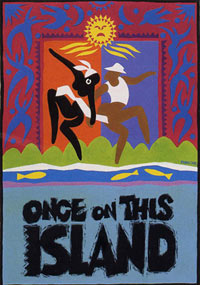
"Once on this Island" is one of my all-time favorite stories. Great score, beautiful music, powerful lyrics, all attesting to the incredible power of a good story told. What's not to like?

In our family, we tend to approach Advent with an eye towards social justice. At a time of year when we've just celebrated the bounty of the harvest and counted all our blessings, it seems practically criminal not to look towards those who do not live in plenty and who seek justice.

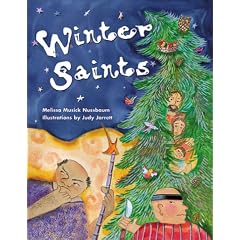
One of my favorite Advent books is Winter Saints by Melissa Musick Nussbaum. In just a few short days, we've already heard the stories of Isaiah, St. Catherine Laboure, Dorothy Day, St. Andrew, and Rosa Parks. And we're only on the first week of Advent! We'll be keeping company with a "great cloud of witnesses" and what I really like about Ms. Nussbaum's book is that she approaches Advent with an eye towards social justice well.

While reading the story of Rosa Parks to my children, I realized that the story was told differently to me as a child. When I first heard it, Rosa Parks was almost portrayed as lazy, a tired seamstress who just didn't want to sit where she was supposed to on the bus.

In reality, Rosa Parks was a tireless woman who had been studying the works of Ghandi and the concept of non-violent protest. In reality, Rosa Parks was the mother of a two-week-old daughter and had just worked a full day when she was arrested. In reality, Rosa Parks had known for a while that she was going to take a stand--or a seat--for equality. The Montgomery bus boycott wasn't a spur of the moment action, but a planned protest, and when Rosa Parks said, "Do what you have to do. I am not moving," she did it knowing full well the repercussions of her actions.


There is a temptation, when telling the stories of heroes and saints, to make them out to be victims. They're oppressed, put down, treated unfairly. I'm coming to realize that this does them a huge disservice. In many cases these saints and heroes walk up to their fate with eyes wide open, knowing the consequences of what they are about to choose... and they choose it anyway. That's what makes them saints and heroes.

And this is why we tell the story. We tell it not because we want our children to feel sorry for those who have gone before them, but because we want them to be empowered by them. We want them to hear the stories of brave men and women who chose what was right and true and just not only when it was convenient to them, but even when it was not.

For out of what we live
And we believe,
Our lives become the stories
That we weave.

Tuesday, October 20, 2009

"Starting Small" from Teaching Tolerence

Are you a leader in a homeschool group or a teacher? You can order "Starting Small," which teaches how you can help color a young child's perception of equity, cooperation, and citizenship.

From the description:
This training kit for early childhood educators profiles seven innovative classrooms in which teachers are helping children practice fairness, respect and tolerance.

"Starting Small" includes:
  • 58-minute film featuring Vivian Gussin Paley
  • Companion text in PDF featuring classroom profiles, reflection prompts and activities
You can order the materials here.

Friday, June 12, 2009

Together Green! Pennies for the Planet


I found this great website from the Audubon Society called Together Green! Act Today, Shape Tomorrow. They encourage kids to save their pennies to help with conservation efforts. On the Downloads for Kids page, you can download a jar label to save pennies for the planet, coloring sheets, a word search, and more. You can learn about saving puffins, protect an ancient swamp forest habitat, or help save a sagebrush habitat. There are even parent and educator pages with special downloads that are great for homeschoolers.

If you check out the toolbar at the top of the site, there are even more resources, including some great downloads and interactive games on the Cool Stuff! page.

Tuesday, June 9, 2009

Activism: Tell the FCC "No Bus Radio!"

At the request of the Campaign for a Commercial-Free Childhood, the Federal Communication Commission will be reporting to Congress about commercial radio broadcasts on school buses and whether or not they are in the public interest.

Bus Radio, much like Channel One, forces children riding school buses to listen to commercial broadcasts. Bus Radio claims it will "take targeted student marketing to the next level," providing companies with a "captive audience," unable to change the station during commercials.

You can find a list of participating school districts here. I'm disgusted that there are four districts in Pennsylvania already signed up.

If you'd like to write a letter to your school district, you can see a PDF of a sample letter here.

Obligation, Inc, has many articles about Bus Radio here. On their site you can also read a coalition letter from over 50 organizations, including the PTA.

Most importantly, you can send you thoughts and comments to the FCC. Instructions are here.

Monday, June 8, 2009

Use this summer for social justice

“Do not wait for leaders; do it alone, person to person.”
~ Mother Teresa

Teaching Tolerance recently sent out an article via email: Use this summer for social justice.

1. Take time to renew and reflect.
I found some great resources here.

2. Visit or learn more about a site of conscience.
Visit a civil rights site or other place of significance to the struggle for justice and peace.

3. Broaden your perspective with books and blogs.
You can find a list of books from a Catholic perspective here.

4. Connect with a social justice group near you.
I found a list here. You will, of course, want to be carefully to screen for orthodoxy.

5. Identify three new ways to integrate social justice themes into your curriculum.
I would like to suggest The Butterfly Project through the Holocaust Museum in Houston as one possibility.

And what does the LORD require of you But to do justice, to love kindness, And to walk humbly with your God?
Micah 6:8

Tuesday, June 2, 2009

More Activism: Petition Merck

I read over at Getting Into a Funk that Merck has stopped producing the separate components of the MMR shot, leaving parents with no options but to get the whole shot or nothing. You can sign a petition asking Merck to reconsider here.

Children need to play.

On the heels of the Crisis in the Kindergarten study, I wanted to share some resources on play in the early childhood years.

Crisis in the Kindergarten: Why children need to play in school (an 8-page PDF summary of the report)
Articles and books on the power of play
Play: Priceless
Learning through Play by David Elkind
Disappearing Pegs in the Road: Discovering Meaning in Young Children's Social Play, an article from one of my favorite college profs, Dr. Alice Meckley

Now go play!

Tuesday, May 12, 2009

Take Action! Pennsylvania Residents

Last week the Pennsylvania Senate passed a budget bill that could derail Pennsylvania's early childhood system. On May 12, Early Childhood Education advocates from across the Commonwealth will converge on Harrisburg to urge the General Assembly to sustain and increase investments in Pennsylvania's early childhood programs.

Your participation this year is even more critical than it was at any time in the past. If you can't come to Harrisburg, you can still play a vital role in securing these critical investments in Pennsylvania's children by participating in "Virtual Action Day".

While I am not a fan of early academics per se, I do believe that every child in care deserves the absolute best care possible. Cutting funding that helps assure quality care for all children in no way serves these little ones. The Keystone Stars program, for example, rewards programs that meet a higher standard of care than the minimum required by the PA Department of Education. Please consider clicking here and participating in Virtual Early Childhood Action Day.

Tuesday, May 5, 2009

Let Burger King know: Sponge Bob, Kids, and Sexuality don't mix

Press Release from the Campaign for a Commercial Free Childhood:
The Campaign for a Commercial-Free Childhood (CCFC) has launched a letter-writing campaign demanding that Nickelodeon and Burger King immediately pull a new, highly sexualized, television ad for SpongeBob SquarePants Kids Meals. The ad, viewable above, features The King singing a remix of Sir Mix-A-Lot’s 1990’s hit song, "Baby Got Back” with the new lyrics, “I like square butts and I cannot lie.” The ad shows images of The King singing in front of women shaking their behinds for the camera intercut with images of SpongeBob dancing along

“It’s bad enough when companies use a beloved media character like SpongeBob to promote junk food to children, but it’s utterly reprehensible when that character simultaneously promotes objectified, sexualized images of women,” said CCFC director Dr. Susan Linn, a psychologist at the Judge Baker Children's Center.

At one point during the ad, The King even measures the behind of one of the woman who has stuffed a phonebook under her dress. After the King informs children about the free SpongeBob toy they get with the purchase of a Burger King Kids Meal, the ad ends with Sir Mix-A-Lot—lounging on a couch with two female admirers—saying, “Booty is booty.” The ad ran during the NCAA men’s basketball championship and other programming last night.

“No parent watching a major sporting event with their children should have to worry about being assaulted by sexualized imagery,” said Joe Kelly of TheDadMan.com, a CCFC Steering Committee Member. “Featuring SpongeBob in an ad like this is a new low. Parents who hope to instill values in their children like respect for women would do well to steer clear of Burger King and Bikini Bottom.”

Added Dr. Linn: “Cartoon characters play a powerful role in the lives of young audiences. That Burger King and Nickelodeon would sell Kids Meals by associating a beloved, male character like SpongeBob with lechery shows how little either company cares about the wellbeing of the children they target.”

The Campaign for a Commercial-Free Childhood is a national coalition of health care professionals, educators, advocacy groups and concerned parents who counter the harmful effects of marketing to children through action, advocacy, education, research, and collaboration. CCFC is headquartered at the Judge Baker Children's Center in Boston. www.commercialfreechildhood.org/.

You can see the actual commercial here:


And you can take action by clicking here and sending a letter.

You can also write letters and make phone calls using this contact information:
Burger King Corporation
5505 Blue Lagoon Drive
Miami, Florida 33126

Corporate Headquarters - 305-378-3000
Marketing/Advertising Information Requests - 305-378-7200
Consumer Relations - 305-378-3535
HAVE IT YOUR WAY® Cards Consumer Help Desk - 1-800-522-1278

I have little hope of them taking this seriously and withdrawing the commercial, however, especially given this quote from Burger King President of Global Marketing Russell Klein in a televised debate with CCFC's Steering Committee Member Joe Kelly:
"I don't know what could be more iconoclastic in puncturing the myth of how self- image of a body for a woman would look than to make her butt square with a telephone book in it."


Um... right... they're airing this commercial to help break through stereotypes.

Tuesday, March 17, 2009

World Water Day


Last week, I wrote about Dream Village's World Water Day to be celebrated on March 22. The theme this year is "Transboundary Water: Sharing water, sharing opportunities".

You can join an event here. Some ideas might include:
Watch a World Water Day online video, found here
Send a World Water Day e-card
Download campaign materials, including shirt transfers, posters, banners and buttons
Find a World Water Day event near you
Download kid-friendly materials from Dream Village and visit their World Water Day website

Whether we live upstream or downstream, we're all in the same boat!

Tuesday, March 10, 2009

World Water Day


I have the coolest friends.

Yesterday, I blogged about Raise the Change, a brand new site started by two of my online friends.

Today, I'd like to bring to your attention to Dream Village and its World Water Day activities, a project another friend of mine is working on.

From their materials:
"Dream Village educates children about important social, economic, and environmental issues by combining illustrated children’s picture books with a fun and interactive web portal. Best of all, the children choose how and where Dream Village makes its charitable donations. With Dream Village, children learn, interact, and then affect real-life positive change."

"We are looking for schools and individual teachers who are looking for a fun, informative, and accessible way to educate their children on the global water crisis and who are also interested in teaching their children about getting involved and making a difference."

1 in 6 people do not have adequate access to clean, fresh water. You can make a difference!

Tuesday, January 13, 2009

Save Handmade Update!


The Consumer Product Safety Commission has been hemming and hawing and making minor "clarifications" here and there, but it's still not enough to assure small business owners and resale shops that they are safe. I've even heard rumors that libraries are being told they will need to close down their children's wings to be in compliance with this law! In the past three days, I have received emails from three different WAHMs who are selling off their stock because they feel they can't continue to be in business once this law comes into effect.

There is a class action lawsuit being formed, and you can read about it here.

You can read my original blog post here, or click on the "Save Handmade" picture in the sidebar. Please, sign the petition. Contact your representatives by email or better yet, call them.

There has to be a way to both protect our children AND support small businesses and resale venues.

Friday, December 19, 2008

Take action! Save handmade.


Remember Christmas a year ago? Hundreds of toys were being recalled for having dangerously high lead levels, small parts that could detach, and unsafe components. Toys had magnets that could be ingested and dangerous chemicals that could and were making our children sick. By and large, these recalled toys were from major toy manufacturers who outsourced their labor to China and other developing nations.

Fast forward to August, 2008, when Congress, recognizing that the Consumer Product Safety Commission lacked the people-power to stop dangerous toys from coming into the US, passed the Consumer Product Safety Improvement Act, or CPSIA. Among other things, this Act bans pthalates, lead, and other dangerous chemicals in toys, mandates that all toys be tested for these things, and requires a date and batch number be placed on each toy.

Sounds good, right?

Well, it is if you're a large toy manufacturer with the money and means. For small American, Canadian, and European toy makers who haven't been a problem in the first place? Not so much.

The costs per toy are going to be upwards of $4,000. Per toy.

That's an impossible sum for the dad in New England carving wooden cars, or the mom in the country making dolls, or even Selecta, a German company who has already announced its plans to withdraw from the US market.

It's not too late. The CPSIA can still be modified to exclude a class of toymakers that have never abused the consumers' trust--small American, European, and Canadian toymakers.

Take Action!
Find your congressperson here, and your senator here. Write to them. The Handmade Toy Alliance has a great sample letter here, as well as a more thorough explanation here.

You can also sign an online petition here.

Save handmade!

Wednesday, October 15, 2008

Blog Action Day: It is in giving that we receive...

For Blog Action Day, I decided to create a list of resources for teaching about poverty.

TeachingTolerance.org is always a great place to start. You could begin with The ABCs of Domestic Poverty. Or complete this math lesson on holiday charity with your older child. I love, love, love this article Beyond the Canned Food Drive, especially this part:
Giving should be celebrated, yet charity projects can produce a damaging, unintended consequence: They can reinforce or exacerbate stereotypes students often hold about people living in poverty.

Here's a whole page of art activities and lesson plans for exploring poverty.

The United Nations website has this lesson on poverty in America.

The League has a fabulous collection of lessons on poverty.

I think the most important lesson of all is that all of us are, in some way or another, impoverished. And it is only by embracing our own poverty and emptiness that we can truly dig deep and give to others, whether that be money or goods or service. And when we give, if we do it with a pure and loving spirit, we are receiving back tenfold.

Or, as St. Francis of Assisi said,
For it is in giving that we receive.

Friday, January 25, 2008

We rallied!

It was civics, PA history, geography, health, and science!

The sign
Photobucket

and the naked people who greeted us.
Photobucket

Naked statues and eight-year-old boys are always good value.

The rally-ers on the steps
Photobucket

Michael, looking like he wants to be anywhere but here
Photobucket

Darker pictures
Photobucket

Photobucket

Sweetest little nursling in PA
Photobucket

The rotunda (hint--when you bring an eight-year-old boy to a homebirth rally and there are no more naked statues to snicker at and he keeps threatening to run away, give him your camera. He might take some lovely pictures!)
Photobucket

Daniel and "my" midwife. I couldn't get them both to look at the camera at the same time.
Photobucket

Photobucket

Leaving Harrisburg and looking out over the mighty Susquehanna:
Photobucket

Photobucket

It was fun. And interesting. We got there late because I have no sense of direction and then couldn't figure out parking. But it was nice to see some familiar faces. Our representative wasn't in the capitol, but we got to see his office anyway and take home some literature.

But I do agree with Emily. Would it be so hard to schedule one of these things when it's warmer?!?!

Tuesday, January 22, 2008

Big Push for Midwives Rally!

Big Push for Midwives Rally

Jan. 24, 2008 11 am

Rotunda of Capitol in Harrisburg

Featuring Dr. Marsden Wagner, Author of "Born in the USA " and other
special guests!

Celebrate the Birth of Pennsylvania Families for Safe Birth…

…a consumer-driven coalition of families and professionals to
promote legislation and policies grounded in the Midwives Model of
Care and to support families' access to safe, appropriate, evidence-
based care during pregnancy, labor, birth and the postpartum
period. PFSB

Supports legislation that licenses Certified Professional Midwives
(CPMs) in Pennsylvania
Raises awareness and support for families choosing an out-of-
hospital birth as a safe, appropriate option
Supports safe family and baby initiatives in all birth settings.
You can join the group and/or get more information at the rally!

Be a Part of The Big Push for Midwives!

The Big Push is a nationally coordinated campaign to advocate for
regulation and licensure of Certified Professional Midwives (CPMs)
in all 50 states and the District of Columbia . This effort is led
by the National Birth Policy Coalition.

Get more info at the rally!

Bring your babies, signs( no sticks, please), friends and family!

Cheer and wave and help us kick off this important movement in our
state!

Please feel free to forward this email, and please use the attached
poster to help raise awareness of this important event in your
community!

Go to our sponsor's web sites for more information!

www.pasafebirth.org

www.birthwithoutboundaries.com

www.savehomebirth.com